
Home / Screenings in Schools & Media Literacy
Screenings in Schools & Media Literacy
UNBROKEN is more than a film about the stage. It is a media text students can take apart, discuss and fact-check, from the resilience of young artists to social media, algorithms, generative AI and freedom of artistic expression. It lets students practise one thing: keeping their own judgement in an age of ever more information.
School Case Study: Niaosong Arts High School, Yunlin
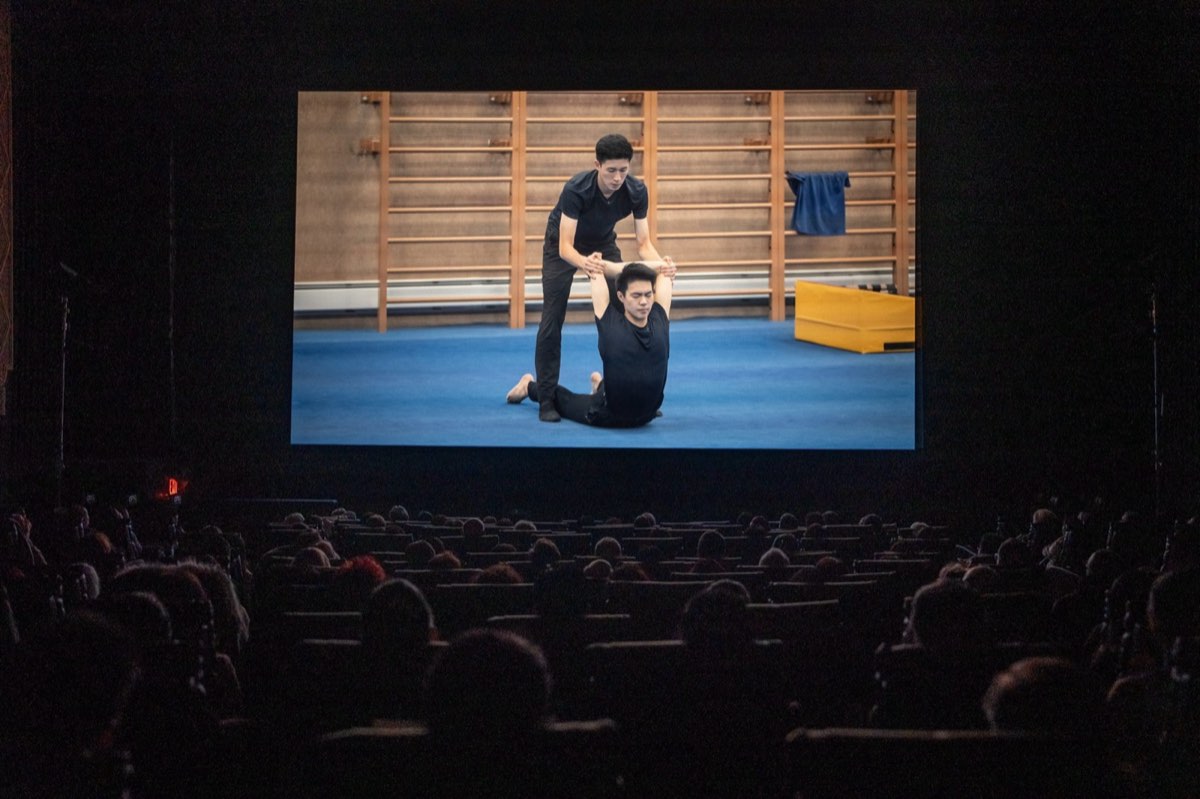
In September 2026, the entire student body and faculty of Niaosong Arts High School in Yunlin County, Taiwan, watched UNBROKEN together. The screening was organised by the Ganjing World Taiwan outreach team. Starting from the training, stage life and outside pressures faced by Shen Yun's young dancers, the post-screening discussion explored media literacy, social-media disinformation, algorithms, arts education and human rights, and Principal Wu Kuo-jui spoke with students and teachers about the importance of telling truth from misinformation.
For a school built around arts education, the long hours of training, the pressure of the stage and the constant self-correction seen in the film are what students experience every day in the practice room. The people on and off the screen come from different backgrounds, yet all of them know what long-term training means.
What made this more than a film screening were the questions left behind once the credits rolled: faced with a contested piece of information, how do we judge it? When social platforms keep pushing content at us, are we seeing the world itself, or a world the algorithm has already chosen for us?
Post-Screening Discussion Guide
These questions are drawn from the directions the school discussion took; teachers can pick what fits the lesson time. The aim is not to find a standard answer but to get students into the habit of asking one more question.
- Reading a documentary: the director decides whom to interview, which footage to keep and how to order events. Which parts of the film come from first-hand experience? Which are the film's own analysis? Which are backed by third-party sources? Which are still disputed?
- Truth, cut short: one line kept from a conversation, a screenshot with its context removed, the ten most emotional seconds of a video — each can create a new narrative. What should we ask first when we meet content like this? (Who said it? Where is the original source? Is it complete? Has the party being accused responded?)
- What the algorithm chose for us: does “I keep seeing this lately” mean “everyone is really talking about it”? If a platform's only goal is to keep us scrolling longer, what kind of content is it likely to amplify?
- Fact-checking in the age of AI: when generative AI gives a complete, confident answer, does that make it correct? Faced with a serious allegation, a statistic or a quotation, how do we go back to the primary source to check?
- Resilience: for an arts student, resilience may simply mean “today went badly; tomorrow I am back in the studio.” What do the dancers' experiences in the film share with your daily life, and where do they differ?
- Artistic expression and human rights: an audience can disagree with a work of art, but where is the line between disagreeing and stopping someone from expressing it? When art and politics collide, what concrete questions arise about freedom of speech and freedom of belief?
Suitable Courses and Audiences
How We Approach Verification
Every documentary reflects its makers' choices. For the specific events described by interviewees in the film, we recommend going back to the primary sources in class and comparing different accounts. We welcome teachers and students reading UNBROKEN this way, because the process itself is media literacy. Further reading: FAQ “Have the allegations in the film been verified?” and Story & Background.
Frequently Asked Questions from Teachers
Which courses is UNBROKEN suitable for?
The film works alongside media literacy, civics and society, arts (dance / performing arts) and information technology courses, and can be woven into human rights education and life education. After the screening, discussion can start from the film's narrative choices, fact-checking, algorithms and social media, generative-AI verification, and artistic expression and human rights.
Which grade levels is it suitable for?
We suggest senior high school students and above. The film includes threats and intimidation; for junior high, teachers should preview it first, then decide, and plan a pre-screening introduction and a post-screening discussion.
Has any school already used this film in a media-literacy class?
Yes. In September 2026, the entire student body and faculty of Niaosong Arts High School in Yunlin County, Taiwan watched the film, followed by a discussion of media literacy, social-media disinformation, algorithms, arts education and human rights, and Principal Wu Kuo-jui spoke with students and teachers about media literacy and telling truth from misinformation. PeoPo Citizen Journalism published a citizen reporter's story on September 24, 2026.
Have the claims in the documentary all been verified? How should a class handle them?
Every documentary reflects its makers' choices. In class, we suggest guiding students to distinguish what comes from first-hand experience, what is the film's own analysis, what is backed by third-party sources and what is still disputed, and then to go back to primary sources and compare multiple accounts. That process is itself a media-literacy exercise.
How does a school request a screening?
Fill in the screening request form on the Screenings / Watch page with the school name, contact person, planned date and venue, and choose High school / junior high / elementary or College or university as the organization type. We will get back to you as soon as possible. You can also watch the full film online on Ganjing World.
Bring the Film to Your School
Whether it is a whole-school assembly, a class, a club activity or teacher training, we would love to hear from you. Fill in the screening request form with your school name, planned date and venue, and we will reply as soon as possible.
The case study on this page draws on a citizen reporter's story on PeoPo Citizen Journalism. PeoPo is the citizen journalism platform of Taiwan's Public Television Service; stories on the platform do not represent the views of PTS.